Author: AMAN PARIHAR

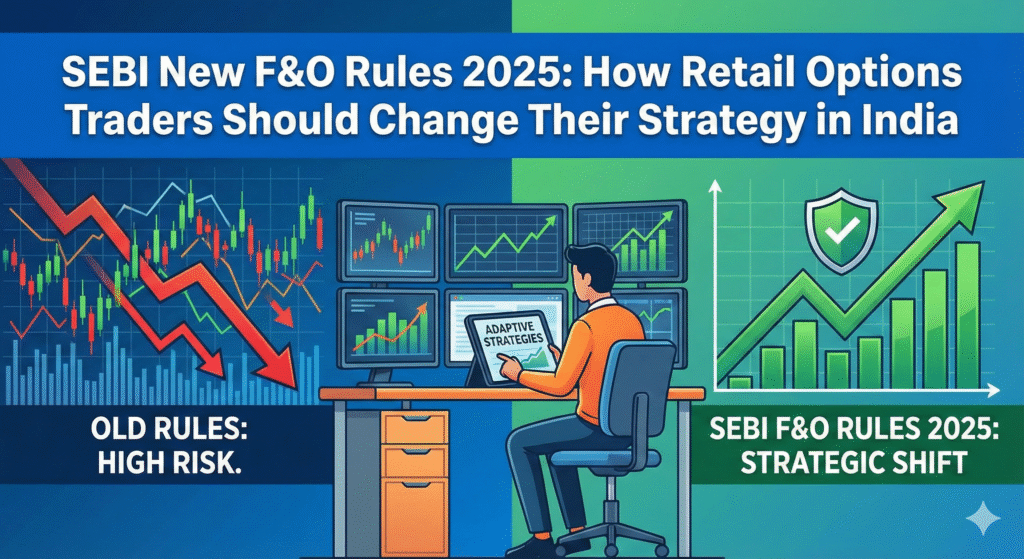
  • SEBI’s New F&O Rules (Dec 2025): Final Deadline & Your 2026 Strategy

    1. The December 2025 Hard Deadline: What’s New?

    The most critical change this December is the removal of the ‘Next Day Compliance’ buffer. Previously, traders had a one-day grace period to adjust their positions if they breached Market Wide Position Limits (MWPL) or personal delta limits.

    Key updates effective now:

    Delta Limits: Gross long and short delta limits are strictly capped, impacting liquidity and large-scale options selling strategies.

    As of December 2025, the Indian derivatives market has entered its most significant regulatory phase yet. With SEBI’s final glide path for index options ending on December 6, 2025, retail traders are now operating under a “Hard Limit” regime. This means no more grace periods for excess delta positions and stricter intraday monitoring that could trigger immediate margin calls.

    Zero Grace Period: Positions must be compliant by the end of the same trading day.

    Enhanced Intraday Monitoring: Exchanges are now conducting multiple random snapshots to check for exposure violations.

    If you are an options trader in India, your strategy for 2026 cannot be the same as it was in 2024. In this post, we break down exactly what has changed this month and how you should adapt your trading plan to stay profitable and compliant in the new year.

    2. Strategy Shifts for 2026

    In this new environment, retail traders must shift from pure speculation to risk-managed setups.

    What you should do now:

    • Shift to Defined-Risk Spreads: Instead of naked option selling, use Bull Call Spreads, Bear Put Spreads, or Iron Condors. These have capped losses and often better margin treatment under the new rules.
    • Maintain a Cash Buffer: Since intraday monitoring is random, keeping a 15-20% cash buffer in your trading account is no longer optional—it’s a necessity to avoid auto-liquidation.
    • Focus on Liquid Indices: Stick to Nifty 50 and Bank Nifty where bid-ask spreads are tight and liquidity is high enough to handle sudden volatility.

    3. Commodity Outlook: Copper and Natural Gas

    As we look toward 2026, commodities like Copper and Natural Gas are showing strong technical patterns. Industrial demand for copper remains a key theme for the new year. Traders should watch for breakouts on the MCX and align their positions with global inventory reports.

    Final Thoughts

    December 2025 is a turning point for the Indian stock market. While the new SEBI rules might seem restrictive, they are designed to bring maturity to the derivatives segment. By adapting your strategy early and focusing on risk management, you can navigate these changes successfully.

    What are your thoughts on the new F&O limits? Let us know in the comments below!

    Disclaimer: Trading in derivatives involves high risk. This post is for educational purposes only. Always consult a SEBI-registered advisor before making investment decisions.
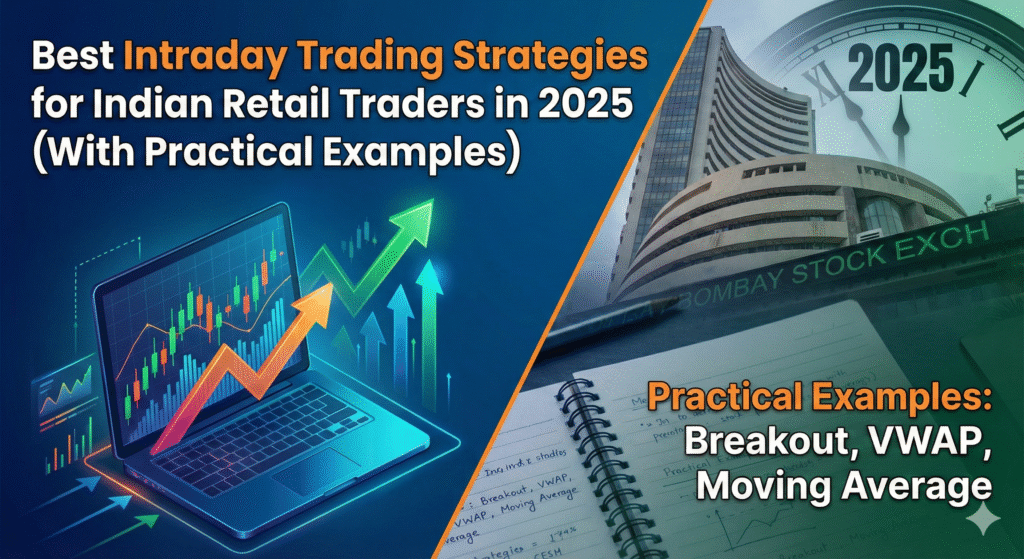
  • Best Intraday Trading Strategies for Indian Retail Traders in 2025 (With Practical Examples)

    Intraday trading in India has exploded in 2024-2025, with retail participation at an all-time high. The stock market volatility, lower brokerage costs, and accessibility of trading platforms have made day trading more attractive than ever. However, without proven strategies and disciplined execution, most traders lose money. This guide covers the best intraday trading strategies specifically designed for Indian retail traders, complete with practical examples and risk management rules.

    Why Intraday Trading is Booming in 2025

    The Indian intraday trading market has grown significantly due to several factors:

    • Increased Retail Participation: More Indians now trade actively through mobile apps and funded accounts.
    • Lower Brokerage Costs: Flat fees and zero-brokerage models have reduced transaction costs dramatically.
    • Market Volatility: Economic changes, geopolitical events, and FII activity create daily price movements, presenting day trading opportunities.
    • Better Technology: Real-time charting tools, scanners, and AI-powered alerts have made analysis more accessible.

    However, this growth comes with a warning: Over 90% of retail day traders lose money. The difference between winners and losers is not luck—it’s a proven strategy, disciplined execution, and strict risk management.

    What Makes a Winning Intraday Strategy?

    Before diving into specific strategies, let’s understand the characteristics of a high-probability intraday strategy:

    1. Liquidity: Trade only highly liquid instruments—large-cap stocks, index futures (Nifty, Bank Nifty), and ETFs.
    2. Clear Entry and Exit Rules: Ambiguity leads to emotional trading and losses.
    3. Tight Risk-Reward Ratio: Aim for at least 1:2 risk-reward on every trade (risk 1% to make 2%).
    4. Backtested and Paper Traded: Never trade live without proving the strategy works first.
    5. Position Sizing: Never risk more than 1-2% of your capital per trade.

    Best Intraday Trading Indicators for Indian Markets

    These indicators work best on 5-minute, 15-minute, and 1-hour charts:

    1. Volume Weighted Average Price (VWAP)

    VWAP shows the average price at which institutional investors are trading. Intraday reversals often happen at VWAP levels. On high-volume breakouts, price respecting VWAP is a strong bullish or bearish signal.

    2. Exponential Moving Averages (EMA)

    Use 9-period and 20-period EMAs on 5-minute charts. When the 9 EMA is above the 20 EMA, the trend is up. Pullbacks to the 9 EMA are ideal buy zones in an uptrend.

    3. Relative Strength Index (RSI)

    RSI above 70 indicates overbought conditions, and below 30 indicates oversold conditions. However, in strong intraday trends, RSI can remain overbought or oversold for extended periods. Use RSI for divergence trading rather than absolute levels.

    4. Volume

    Volume confirms breakouts. A price breakout on low volume is likely to fail. True breakouts always come with increased volume.

    Strategy 1: Opening Range Breakout (ORB) for Nifty and Bank Nifty

    The Opening Range Breakout strategy is one of the most popular intraday trading strategies in India, especially for index futures.

    How It Works:

    1. Time Frame: First 15-30 minutes of market open (9:15 AM to 9:45 AM IST).
    2. Mark the Range: Note the high and low of the first 15-30 minutes.
    3. Calculate Mid-Point: (High + Low) / 2
    4. Entry Rules:
    • Long Entry: When price breaks above the range high with confirmed volume. Stop loss: 10-15 pips below the mid-point.
    • Short Entry: When price breaks below the range low. Stop loss: 10-15 pips above the mid-point.
    1. Profit Target: 1.5 to 2.5 times the risk taken (e.g., if you risk 15 pips, target 30-40 pips).

    Example:

    Suppose Bank Nifty opens with the following range in the first 30 minutes:

    • High: 52,200
    • Low: 52,000
    • Mid-point: 52,100

    Long Setup: If Bank Nifty breaks above 52,200 on volume, enter at 52,220. Stop loss at 52,085 (risk: 135 points). Target: 52,350 (reward: 130 points). Risk-reward is approximately 1:0.96 (not ideal but acceptable if the strategy hits 60%+ winning trades).

    Short Setup: If Bank Nifty breaks below 52,000 on volume, enter at 51,980. Stop loss at 52,115 (risk: 135 points). Target: 51,850 (reward: 130 points).

    Key Points:

    • This strategy works best on volatile days.
    • On range-bound days, multiple false breakouts can lead to losses.
    • Avoid trading if major economic news (RBI policy, US Fed announcement) is expected within 1-2 hours.

    Strategy 2: VWAP Pullback Strategy for Liquid Large-Caps

    This strategy works well on highly liquid stocks like SBI, HDFC Bank, TCS, Infosys, and Reliance, which have high intraday volume and minimal spreads.

    How It Works:

    1. Identify the Trend: Check the 15-minute or 1-hour chart. Is the stock moving in an uptrend or downtrend?
    2. Find VWAP: Plot VWAP on your 5-minute chart.
    3. Wait for a Pullback: After a strong intraday move, wait for price to pullback near VWAP with volume drying up.
    4. Entry: When price approaches VWAP from above (in an uptrend), enter on reversal candles (Doji, Hammer) on high volume. Stop loss: 2-3% below VWAP.
    5. Profit Target: Exit at 1:1 risk-reward or trail the stop using the 9 EMA.

    Example:

    Suppose TCS is in an intraday uptrend on the 15-minute chart:

    • Trend high: 3,520
    • Pullback to VWAP: 3,480
    • Current price: 3,485

    Entry: Buy at 3,490 (on reversal candle confirmation). Stop loss: 3,460 (risk: 30 points). Target: 3,520 (reward: 30 points).

    Key Points:

    • This strategy has a high win rate (60-70%) because it trades in the direction of the trend.
    • It works best when the trend is clean and strong.
    • On choppy, sideways days, pullbacks can be fake, leading to losses.

    Strategy 3: Breakout + Retest Strategy on 5-Minute Charts

    This strategy takes advantage of the fact that traders often chase breakouts, and the initial move is usually too fast. The retest offers a better risk-reward entry.

    How It Works:

    1. Identify Key Levels: Mark intraday support and resistance on 5-minute or 15-minute charts.
    2. Wait for Breakout: Wait for price to break above resistance or below support on high volume.
    3. First Pullback: Instead of entering at the breakout, wait for price to retest the broken level (now acting as support for upside breakouts).
    4. Entry on Retest: Enter when price reverses from the retest on volume. Stop loss: Just below the retest low (for long breakout).
    5. Target: 1.5-2x the risk taken.

    Example:

    Suppose Infosys on a 5-minute chart has:

    • Resistance at 1,950
    • Price breaks above 1,950 to 1,965 on high volume
    • Price then retests 1,950 to 1,955 with lower volume

    Entry: Buy at 1,957 (on reversal from retest). Stop loss: 1,945 (risk: 12 points). Target: 1,975 (reward: 18 points). Risk-reward: 1:1.5, which is acceptable.

    Key Points:

    • This strategy has a higher win rate than chasing breakouts.
    • It reduces false breakout risks.
    • It works best on volatile, high-volume trading days.

    Risk Management Rules for Indian Intraday Traders

    No strategy works if risk is not managed properly. Follow these rules strictly:

    1. Fixed Daily Loss Limit

    Set a maximum daily loss of 2-3% of your trading capital. Once you hit this limit, stop trading for the day. If you start with ₹1,00,000, your max daily loss should be ₹2,000 to ₹3,000.

    2. Position Sizing

    Risk only 1-2% per trade. If a trade requires a 30-point stop loss and each point is worth ₹100 in Bank Nifty, the risk is ₹3,000. With ₹1,00,000 capital, this is 3% risk—too high. Reduce the position size.

    3. Always Use Stop Losses

    Never trade without a predetermined stop loss. Averaging down in intraday trading is extremely dangerous because intraday moves can be severe.

    4. Margin Management

    Be cautious with leverage. Just because your broker allows you to trade with 5x margin doesn’t mean you should. Over-leverage amplifies losses quickly.

    5. Maximum Trades Per Day

    Limit yourself to 5-8 trades per day. Over-trading leads to emotional decisions and losses.

    6. Avoid News Events

    Don’t trade in the 30 minutes before or after major news events (RBI policy, US Fed decisions, election results, corporate earnings). These events cause extreme volatility and gap moves that stop losses can’t protect against.

    Common Intraday Trading Mistakes to Avoid

    1. Revenge Trading

    After a loss, many traders take bigger risks to recover losses quickly. This leads to larger losses. Stick to your position sizing.

    2. Trading Illiquid Stocks

    Small-cap stocks and penny stocks have wide bid-ask spreads. You’ll lose money to spread costs alone before the trade works.

    3. No Trading Plan

    Entering trades based on “feeling” or tips leads to emotional trading and losses. Every trade must have a planned entry, exit, and stop loss.

    4. Ignoring Trend Direction

    Trading against the primary trend is counterintuitive. If Nifty is down 200 points, avoid buying individual stocks on weakness unless there’s a specific technical setup.

    5. Switching Strategies

    Traders often abandon a strategy after 2-3 losses and switch to something else. Strategies need 50+ trades to prove themselves. Give each strategy at least a month of trading.

    6. Trading During Low Volume Hours

    Intraday volume is highest from 9:15 AM to 11 AM IST and lowest from 12:30 PM to 2:30 PM. Trade during high-volume periods for better execution.

    How to Practice and Master These Strategies

    Step 1: Backtest

    Before trading live, backtest each strategy on 50-100 historical trades using free tools like TradingView or Zerodha’s backtest feature. Track the win rate, average win, and average loss.

    Step 2: Paper Trade

    Once backtesting shows a positive expectancy (average win × win rate > average loss × loss rate), paper trade for 1-2 weeks. Execute the exact same way you would with real money.

    Step 3: Live Trading (Small Size)

    Start with the smallest position size possible. Trade live for 2-4 weeks with real money but minimal capital at risk. This builds experience and psychological resilience.

    Step 4: Scale Up Gradually

    Once you’re consistently profitable on small size, gradually increase position size. Never double your position size after a winning week.

    Final Thoughts: The Key to Intraday Success

    The best intraday trading strategies for Indian retail traders share common traits: they’re simple, they’re based on price action and volume, and they prioritize risk management over big profits. Trading is a long-term game. Strategies that have a 55-60% win rate and a 1:1.5 risk-reward ratio will make you money over time if you follow them consistently.

    Remember: The goal is not to find the “perfect” strategy—it’s to find a strategy that works for you and execute it with discipline. Start small, backtest thoroughly, and scale gradually. Most importantly, respect your stop losses and never risk more than you can afford to lose.

    Start your intraday trading journey today with proven strategies and proper risk management. The Indian stock market is full of opportunities for disciplined traders who follow a systematic approach.

    Disclaimer: This article is for educational purposes only and does not constitute financial advice. Always consult with a SEBI-registered investment advisor before trading. Past performance does not guarantee future results. Intraday trading carries significant risk of capital loss.

  • Best Sector Rotation Strategies for Indian Stocks in 2025

    Best Sector Rotation Strategies for Indian Stocks in 2025

    Introduction

    The Indian stock market in October 2025 continues to experience significant volatility, driven by global macroeconomic uncertainties, fluctuating FII flows, and domestic policy decisions. For traders and investors navigating these turbulent waters, sector rotation strategies have emerged as a crucial tool to not just survive but thrive during periods of high volatility.

    Sector rotation involves strategically shifting investments from one sector to another based on economic cycles, market trends, and performance indicators. In the current volatile environment, understanding and implementing effective sector rotation can help you maximize returns while managing risk. This comprehensive guide will walk you through winning sector rotation strategies tailored specifically for the Indian stock market in 2025.

    What is Sector Rotation?

    Sector rotation is an investment strategy where investors and traders move capital between different market sectors to capitalize on various stages of the economic cycle. Different sectors perform better at different times based on economic conditions, interest rates, and investor sentiment.

    Examples from Indian Markets:

    • IT Sector: Historically performs well when the rupee weakens against the dollar and global tech spending increases. Companies like TCS, Infosys, and Wipro benefit from strong export revenues.
    • Auto Sector: Shows strength during economic expansion when consumer confidence is high. Maruti Suzuki, Tata Motors, and M&M typically lead during these phases.
    • Pharma Sector: Acts as a defensive sector during uncertainty and rallies during healthcare crises or when export opportunities expand. Dr. Reddy’s, Sun Pharma, and Cipla are key players.
    • Banking Sector: Thrives when interest rate cycles favor lending and credit growth accelerates. HDFC Bank, ICICI Bank, and SBI dominate this space.
    • Metals Sector: Performs well during infrastructure booms and commodity price rallies. Tata Steel, Hindalco, and JSW Steel are major beneficiaries.

    Why Volatility Persists in 2025

    Understanding the drivers of current market volatility is essential for effective sector rotation:

    Key Factors Driving Indian Stock Market Volatility:

    • FII/DII Flows: Foreign Institutional Investors have been net sellers in several months of 2025, creating downward pressure. Domestic Institutional Investors have attempted to cushion the impact, but the tug-of-war continues to create volatility.
    • RBI Monetary Policy Decisions: The Reserve Bank of India’s stance on interest rates directly impacts liquidity and sector performance. Any hawkish or dovish signals trigger significant market movements.
    • Corporate Earnings: Q2 2025 earnings have been mixed, with some sectors exceeding expectations while others disappoint. This creates opportunities for sector rotation as money flows to outperformers.
    • Global Factors: US Fed policy, crude oil prices, geopolitical tensions, and China’s economic health continue to influence Indian markets.
    • Valuation Concerns: After the strong rally in previous years, some sectors are trading at elevated valuations, making investors cautious and selective.

    Winning Sector Rotation Strategies

    How to Spot Rotation Signals

    Successful sector rotation depends on identifying early signals that indicate money is moving from one sector to another:

    1. News and Policy Announcements

    • Monitor RBI policy statements, government budget allocations, and infrastructure spending announcements
    • Track global news affecting specific sectors (oil prices for energy, tech layoffs for IT, etc.)
    • Watch for regulatory changes that could benefit or harm specific industries

    2. Price Action and Volume Analysis

    • Look for sectors showing consistent higher highs and higher lows
    • Monitor unusual volume surges in sectoral indices (Nifty IT, Bank Nifty, etc.)
    • Identify sectors breaking out of consolidation patterns while others decline

    3. Technical Indicators

    • Use Relative Strength Comparison to compare sector indices against Nifty 50
    • Monitor sector-wise moving averages (50-day and 200-day)
    • Track Relative Strength Index (RSI) to spot overbought sectors (potential exits) and oversold sectors (potential entries)

    Actionable Strategies for Different Trading Styles

    For Short-Term Traders (Intraday to Few Days):

    • Focus on sectors showing momentum in morning trade based on global cues
    • Use sector ETFs or leading stocks from rotating sectors for quick entries
    • Example: If IT sector opens strong due to positive US tech earnings, trade IT leaders like TCS or Infosys
    • Set tight stop losses (2-3%) and book profits on intraday or next-day strength

    For Swing Traders (Few Weeks to Months):

    • Identify sectors entering uptrends based on weekly charts and fundamental catalysts
    • Build positions gradually in 2-3 quality stocks from the emerging sector
    • Example: If pharma sector shows export order growth and price breakouts, accumulate Sun Pharma, Dr. Reddy’s over 2-3 weeks
    • Use trailing stop losses to protect gains as the trend develops

    For Long-Term Investors (Portfolio Rebalancing):

    • Review portfolio sector allocation quarterly
    • Reduce exposure to overvalued, overweight sectors and increase allocation to undervalued, underweight sectors
    • Example: In October 2025, if your portfolio is 40% banking but sector valuations are stretched, trim to 25-30% and add to defensive pharma or improving auto sectors
    • Maintain diversification across 6-8 sectors to manage risk

    Current Sector Examples (October 2025 Context)

    • Rotating Into: PSU stocks are seeing renewed interest due to government focus; select pharma stocks benefit from export opportunities
    • Rotating Out Of: Some expensive consumer stocks after disappointing rural demand; certain IT mid-caps facing margin pressures
    • Watch Closely: Banking sector ahead of credit growth data; metals sector dependent on China’s stimulus effectiveness

    Mistakes to Avoid & Risk Management Tips

    Common Sector Rotation Mistakes:

    1. Overtrading: Switching sectors too frequently leads to transaction costs eating into profits. Stick to well-researched rotation calls with clear signals.
    2. Ignoring Macro Factors: Rotating based purely on technical charts without understanding underlying economic drivers often leads to false signals.
    3. Chasing Past Winners: By the time a sector has already rallied 20-30%, the best gains may be over. Look for sectors showing early signs of rotation, not those already in headlines.
    4. Neglecting Stock Quality: Even in the right sector, poor quality stocks can underperform. Focus on leaders with strong fundamentals.
    5. Ignoring Valuations: Don’t rotate into sectors trading at excessive valuations just because they show momentum. Expensive sectors can correct sharply during volatility.

    Essential Risk Management Tips:

    • Position Sizing: Don’t allocate more than 15-20% of your portfolio to any single sector
    • Stop Losses: Always use stop losses—typically 8-10% for swing trades, 5-7% for short-term positions
    • Diversification: Even while rotating, maintain exposure to 5-7 sectors to manage unsystematic risk
    • Cash Reserves: Keep 10-15% cash to capitalize on sudden opportunities during volatile periods
    • Regular Review: Monitor sector performance weekly and reassess your rotation thesis monthly

    FAQ: Sector Rotation in Indian Stock Market

    Q1: Can beginners use sector rotation strategies effectively?

    Yes, beginners can use sector rotation, but should start with a simplified approach. Instead of frequent trading, focus on quarterly portfolio rebalancing based on clear economic signals. Use diversified sectoral ETFs like Nifty Bank ETF, Nifty IT ETF, or Nifty Pharma ETF rather than individual stocks. This provides instant diversification and reduces stock-specific risk. As you gain experience and understanding of market cycles, you can graduate to more active rotation strategies.

    Q2: How can I use technical and fundamental tools together for sector rotation?

    The most effective approach combines both:

    • Fundamentals First: Use economic indicators, policy changes, and earnings trends to identify which sectors have tailwinds (fundamental support for growth)
    • Technicals for Timing: Once you’ve identified fundamentally strong sectors, use technical analysis to time your entry. Look for breakouts, trend confirmations, and momentum indicators
    • Example: Fundamentally, you identify that banking sector will benefit from RBI rate cuts (announced or expected). Technically, wait for Bank Nifty to break above resistance or show bullish divergence on RSI before entering positions
    • Continuous Monitoring: Use fundamental news to stay in the trade, but use technical stop losses to protect capital if the thesis doesn’t play out

    Conclusion

    Sector rotation strategies offer a powerful framework for navigating the Indian stock market volatility in 2025. By understanding economic cycles, monitoring rotation signals through news, price action, and technical indicators, and implementing strategies tailored to your trading style, you can position yourself to benefit from market movements rather than fall victim to them.

    Remember that successful sector rotation requires patience, discipline, and continuous learning. Avoid common mistakes like overtrading and chasing past winners, and always prioritize risk management through proper position sizing and stop losses.

    The key to mastering sector rotation lies in staying informed, remaining flexible, and acting on well-researched insights rather than emotions or market noise.

    Your Turn: Join the Conversation!

    We’d love to hear from you! Which sector are you currently tracking for rotation opportunities in your portfolio? Are you seeing strength in IT, banking, pharma, or perhaps emerging opportunities in PSUs or infrastructure?

    Share your thoughts, strategies, and questions in the comments below. Whether you’re a beginner exploring sector rotation for the first time or an experienced trader with insights to share, your perspective adds value to our community.

    Have specific questions about implementing these strategies? Drop them in the comments and we’ll respond with detailed guidance tailored to your situation.

    Don’t forget to bookmark this guide and share it with fellow traders and investors who could benefit from smarter portfolio strategies during these volatile times!

    Disclaimer: This content is for educational purposes only. Always conduct your own research or consult with a qualified financial advisor before making investment decisions.

  • AI & Voice Search: The New Era of Stock Market Investing in India (2025 Guide)

    AI & Voice Search: The New Era of Stock Market Investing in India (2025 Guide)

    Introduction

    The Indian stock market is witnessing a revolutionary transformation in 2025, powered by artificial intelligence and voice search technology. As traditional research methods give way to instant, conversational queries and AI-driven insights, investors now have unprecedented access to real-time market intelligence. Whether you’re tracking Nifty movements, analyzing Sensex trends, or researching individual stocks, AI and voice search are fundamentally changing how we discover, process, and act on financial information. This guide will walk you through leveraging these cutting-edge technologies to make smarter, faster investment decisions in today’s dynamic market landscape.

    AI-Powered Search in Indian Stock Market

    Google’s Search Generative Experience (SGE) and AI-powered search are transforming how investors research stocks and market trends. Instead of sifting through dozens of links, AI now provides instant summaries, comparative analyses, and predictive insights directly in search results.

    Key Features:

    • AI Summaries: Get instant overviews of company performance, financial metrics, and analyst recommendations without clicking multiple links
    • Predictive Search: AI anticipates your research needs, suggesting related queries like “Reliance vs TCS growth prospects 2025” when you search for tech stocks
    • Smart Comparisons: Automatically compare stocks, sectors, or indices with AI-generated side-by-side analyses
    • Contextual Understanding: AI understands complex queries like “undervalued mid-cap stocks with strong fundamentals in manufacturing sector”

    Tips for Responsible Use:
    ✓ Always verify AI-generated insights with official sources like NSE, BSE, or company financials
    ✓ Cross-reference recommendations with multiple platforms like Moneycontrol, Economic Times, and broker reports
    ✓ Remember that AI provides historical analysis – market conditions change rapidly
    ✓ Use AI as a starting point for research, not as the sole basis for investment decisions
    ✓ Be aware of potential biases in AI training data and seek diverse perspectives

    Voice Search Optimization for Investors

    Voice search has become an essential tool for busy investors who need quick market updates without interrupting their workflow. Whether you’re driving, cooking, or multitasking, voice assistants provide instant access to critical stock market information.

    What is Voice Search?
    Voice search allows you to ask questions and receive answers using natural language through devices like smartphones, smart speakers (Google Home, Alexa), and voice assistants (Google Assistant, Siri). For stock investors, this means hands-free access to real-time prices, news, and market analysis.

    Practical Uses for Stock Enthusiasts:

    • Quick price checks during market hours without opening apps
    • Getting instant news updates about your watchlist stocks
    • Setting voice-activated price alerts and reminders
    • Listening to market summaries while commuting
    • Checking portfolio performance during breaks
    • Researching companies through conversational queries

    Effective Voice Commands for Stock Information:

    “Hey Google, show latest Nifty news”
    “Alexa, what’s the current Sensex value?”
    “Hey Google, Reliance Industries stock price”
    “Siri, what’s happening with HDFC Bank today?”
    “Hey Google, top gainers in Nifty 50”
    “Alexa, tell me today’s market highlights”
    “Hey Google, set reminder to check Infosys results tomorrow”
    “Siri, read latest business news from Economic Times”
    “Hey Google, compare TCS and Infosys performance”

    Real-Time News Integration

    In today’s volatile markets, the ability to access and react to news quickly can be the difference between profit and loss. Real-time news integration ensures you’re never caught off-guard by market-moving events.

    Live News Feeds:

    • Moneycontrol: Set up personalized alerts for specific stocks, sectors, or market indices. Their mobile app provides push notifications for breaking news.
    • Economic Times: Subscribe to real-time market updates and sector-specific news feeds
    • CNBC TV18: Live market coverage with instant updates on policy changes, corporate announcements, and global market movements

    X/Twitter Integration:
    Follow key accounts for instant market intelligence:

    • @nseindia – Official NSE updates
    • @BSEIndia – BSE announcements
    • @SEBI_India – Regulatory updates
    • @RBI – Monetary policy decisions
    • Leading market analysts and financial journalists for instant commentary

    Moneycontrol Alerts Setup:

    1. Download the Moneycontrol app
    2. Go to ‘Watchlist’ and add your tracked stocks
    3. Tap on any stock > Set Alert
    4. Configure price alerts (e.g., notify when stock moves +/- 3%)
    5. Enable news alerts for earnings announcements, board meetings, and corporate actions

    Importance of Quick Reaction:
    Markets react within minutes to major news. Early access to information about:

    • Quarterly results announcements
    • RBI policy rate decisions
    • Government policy changes (budget announcements, sector-specific reforms)
    • Global market triggers (Fed decisions, crude oil price movements)
    • Company-specific news (mergers, acquisitions, management changes)

    …can help you make timely decisions about entering, exiting, or adjusting positions. However, always combine speed with prudence – avoid knee-jerk reactions based on headlines alone.

    Actionable Guide – Setting Up AI & Voice Tools

    Step-by-Step Setup:

    1. Setting Up Google SGE:
    • Ensure you have the latest Chrome browser or Google app
    • Sign in to your Google account
    • Visit google.com/search/labs or search for “Search Labs”
    • Opt into SGE (Search Generative Experience)
    • Start using conversational queries like “explain HDFC Bank’s Q3 results in simple terms”
    • Bookmark the SGE feature for quick access
    1. Configuring Moneycontrol Alerts:
    • Download Moneycontrol app from Play Store/App Store
    • Create a free account or sign in
    • Navigate to Markets > Create Watchlist
    • Add stocks you want to track (Nifty 50 stocks, your portfolio holdings, watchlist candidates)
    • For each stock: Tap stock name > Bell icon > Set Price Alert
    • Configure percentage-based or absolute price targets
    • Enable push notifications in app settings
    • Subscribe to news alerts: Settings > Notifications > Enable “Breaking News” and “Stock News”
    1. Setting Up Voice Assistants for Stock Market:

    For Google Assistant:

    • Open Google app > More > Settings > Google Assistant
    • Under “Assistant devices,” select your phone
    • Enable “Hey Google” detection
    • Test with: “Hey Google, what’s the Nifty 50 index today?”
    • Link financial apps (if available) for personalized portfolio updates

    For Amazon Alexa:

    • Download Alexa app
    • Enable Moneycontrol skill: “Alexa, enable Moneycontrol skill”
    • Try: “Alexa, ask Moneycontrol about Nifty”
    • Set up daily market briefings: “Alexa, what’s my flash briefing?” (add financial news sources)

    For Apple Siri:

    • Ensure Siri is enabled in Settings
    • Use natural queries: “Hey Siri, search web for today’s stock market performance”
    • Add Shortcuts for frequently used queries (Settings > Shortcuts > Add custom commands)

    Dos:
    ✓ Start with broad market queries to understand AI capabilities
    ✓ Gradually customize alerts based on your investment style
    ✓ Test voice commands in quiet environments first
    ✓ Use AI for research and validation, not as sole decision-maker
    ✓ Keep your watchlist updated with current holdings and targets
    ✓ Review alert settings monthly to avoid notification fatigue
    ✓ Combine multiple tools for comprehensive market coverage

    Don’ts:
    ✗ Don’t rely solely on AI-generated investment advice
    ✗ Don’t set too many alerts – focus on critical price levels
    ✗ Don’t ignore the source credibility when AI cites information
    ✗ Don’t make impulsive trades based on voice search results alone
    ✗ Don’t share sensitive portfolio data with untrusted voice apps
    ✗ Don’t forget to verify breaking news from multiple sources
    ✗ Don’t use public voice assistants for confidential financial queries

    FAQs: AI & Voice Search in Stock Investing

    Q1: Can AI-powered search provide reliable stock tips?
    A: AI can aggregate and summarize publicly available information, analyst reports, and historical data, but it cannot predict market movements with certainty. Use AI as a research tool to gather insights quickly, but always conduct your own due diligence. Verify AI suggestions against fundamental analysis, technical charts, and your risk appetite before investing.

    Q2: How do I filter fake news when using real-time alerts?
    A: Stick to verified sources like NSE/BSE official announcements, SEBI circulars, and established financial news platforms (Moneycontrol, Economic Times, Bloomberg Quint). Cross-verify breaking news with at least two credible sources. Be skeptical of unverified social media posts and WhatsApp forwards. Check the timestamp – old news recirculated as “breaking” is a common misinformation tactic.

    Q3: Is voice search secure for checking my portfolio?
    A: Voice search through major assistants (Google, Alexa, Siri) is generally secure, but avoid using public devices or speaking confidential information in public spaces. For sensitive queries about your portfolio value or transactions, use authenticated apps with biometric security instead. Never share login credentials via voice commands.

    Q4: Which voice assistant works best for Indian stock market queries?
    A: Google Assistant typically provides the most comprehensive results for Indian market queries due to its integration with Google Search and local news sources. However, Alexa’s Moneycontrol skill offers specific market data. Use Google Assistant for general queries and news, and Alexa with Moneycontrol skill for specific stock prices and indices.

    Q5: How can I avoid information overload with real-time alerts?
    A: Be strategic with alert configuration:

    • Set price alerts only for significant movements (±3-5%)
    • Limit news alerts to high-priority stocks in your portfolio
    • Use “critical news only” settings
    • Designate specific times to review non-urgent alerts
    • Group similar alerts to receive consolidated updates
    • Periodically review and remove alerts for stocks you’re no longer tracking

    Q6: Can AI help with technical analysis and chart patterns?
    A: AI tools are increasingly capable of identifying chart patterns, support/resistance levels, and technical indicators. However, technical analysis requires context and experience. Use AI-identified patterns as confirmation signals, not standalone triggers. Combine AI insights with your understanding of market conditions and multiple technical indicators.

    Q7: Are there any costs associated with these AI and voice tools?
    A: Most basic features are free:

    • Google SGE: Free with Google account
    • Moneycontrol app: Free with ads (premium ad-free version available)
    • Google Assistant/Alexa/Siri: Free on compatible devices
    • X/Twitter: Free for basic access

    Some advanced features may require subscriptions (premium news services, advanced charting tools, or professional-grade alert systems).

    Q8: How accurate are AI predictions for stock movements?
    A: No AI can consistently predict short-term stock movements with high accuracy due to market complexity and countless variables. AI excels at pattern recognition and data analysis but cannot account for unpredictable events (geopolitical tensions, natural disasters, sudden policy changes). Treat AI predictions as probabilistic insights, not certainties, and always maintain proper risk management.

    Conclusion: Embracing the Future of Investing

    Key Takeaways:

    1. AI and voice search are powerful research accelerators, not crystal balls – use them to gather information faster, but apply critical thinking to every decision.
    2. Real-time news integration gives you a competitive edge, but speed must be balanced with accuracy and verification.
    3. Voice assistants make market monitoring more convenient, enabling you to stay informed without constant screen time.
    4. The combination of AI-powered research, voice-enabled quick checks, and real-time alerts creates a comprehensive information ecosystem for modern investors.
    5. Technology enhances decision-making but doesn’t replace fundamental investment principles: diversification, risk management, patience, and continuous learning.

    Future-Proof Your Investing:
    As we move deeper into 2025, investors who embrace these technologies while maintaining disciplined investment practices will have significant advantages. Start small – implement one tool at a time, master its features, then expand your tech toolkit. The goal isn’t to make faster decisions, but to make better-informed decisions faster.

    The stock market rewards those who adapt to change while respecting timeless principles. AI and voice search are your new research assistants – use them wisely, verify their outputs, and let them handle information gathering while you focus on strategic thinking and disciplined execution.

    Call to Action:
    Ready to revolutionize your investment research? Start implementing these AI and voice search strategies today! Share your experiences in the comments below – which tool has been most helpful in your investing journey? Have questions about setting up any of these technologies? Drop them below, and let’s learn together!

  • India Stock Market 2025: How Digital Banking, Green Finance & AI Are Changing Investing Strategies

    India Stock Market 2025: How Digital Banking, Green Finance & AI Are Changing Investing Strategies

    The Indian stock market is experiencing unprecedented transformation as we move into 2025. Three revolutionary forces—digital banking, green finance, and artificial intelligence—are fundamentally reshaping how investors approach the market. This comprehensive guide explores these game-changing trends and provides actionable strategies for modern investors.

    The Digital Banking Revolution in Indian Markets

    Seamless Trading Integration

    Digital banking has revolutionized stock market access for Indian investors:

    • Instant Fund Transfers: UPI integration allows immediate portfolio funding
    • Real-time Settlement: T+1 settlement cycle reduces counterparty risk
    • Mobile-First Trading: 80% of retail trades now happen on mobile platforms
    • Paperless Onboarding: Complete KYC and account opening in under 30 minutes
    • Integrated Banking: Single-app experience for banking and trading

    Impact on Market Participation

    The digital revolution has democratized market access:

    • Retail investor participation increased by 240% since 2020
    • Average transaction costs decreased by 60%
    • New investor accounts growing at 2.5 million per month
    • Rural investor participation up 180%

    Green Finance: The Sustainable Investment Wave

    ESG Integration in Indian Markets

    Environmental, Social, and Governance (ESG) factors are becoming central to investment decisions:

    • Green Bonds Market: Expected to reach ₹5 trillion by 2025
    • Renewable Energy Stocks: Solar and wind companies showing 35% average returns
    • ESG Ratings: SEBI mandating ESG disclosures for top 1000 companies
    • Carbon Credits Trading: New market opportunities emerging

    Top Green Investment Opportunities

    Renewable Energy Sector:

    • Adani Green Energy (ADANIGREEN)
    • Tata Power Company (TATAPOWER)
    • ReNew Energy Global (RNWEGY)

    Electric Vehicles:

    • Tata Motors (TATAMOTORS)
    • Mahindra & Mahindra (M&M)
    • Bajaj Auto (BAJAJ-AUTO)

    Sustainable Infrastructure:

    • L&T (LT)
    • Ultratech Cement (ULTRACEMCO)
    • HDFC Bank (HDFCBANK)

    AI-Powered Investment Strategies

    Machine Learning in Portfolio Management

    Artificial Intelligence is transforming investment approaches:

    • Algorithmic Trading: 65% of institutional trades now use AI
    • Risk Assessment: AI models predict market volatility with 85% accuracy
    • Sentiment Analysis: Social media and news sentiment driving price movements
    • Robo-Advisors: Automated portfolio management for retail investors

    AI Tools for Indian Investors

    Popular AI Trading Platforms:

    • Zerodha Kite with AI insights
    • Upstox Pro with ML-based recommendations
    • Angel One with SmartAPI
    • ICICI Direct with AI advisory

    Smart Investment Strategies Using AI

    1. Momentum Trading with AI

    • Use ML algorithms to identify trending stocks
    • Automated stop-loss and profit booking
    • Pattern recognition for entry and exit points

    2. Value Investing Enhanced by AI

    • AI screening for undervalued stocks
    • Fundamental analysis automation
    • Sector rotation strategies based on economic indicators

    3. Risk Management Through AI

    • Portfolio diversification optimization
    • Correlation analysis across asset classes
    • Dynamic hedging strategies

    Sector-Wise Investment Opportunities for 2025

    Technology Sector

    Top Picks:

    • TCS (TCS)
    • Infosys (INFY)
    • HCL Technologies (HCLTECH)
    • Tech Mahindra (TECHM)

    Banking and Financial Services

    Digital-First Banks:

    • HDFC Bank (HDFCBANK)
    • ICICI Bank (ICICIBANK)
    • Kotak Mahindra Bank (KOTAKBANK)
    • Axis Bank (AXISBANK)

    Healthcare and Pharmaceuticals

    Growth Drivers:

    • Sun Pharma (SUNPHARMA)
    • Dr. Reddy’s (DRREDDY)
    • Cipla (CIPLA)
    • Divi’s Laboratories (DIVISLAB)

    Risk Management in the New Era

    Key Risk Factors to Monitor

    • Regulatory Changes: Keep track of SEBI policy updates
    • Geopolitical Tensions: Impact on FII flows
    • Interest Rate Cycles: RBI monetary policy effects
    • Currency Fluctuations: INR volatility impact on exports

    Diversification Strategies

    Asset Allocation Framework:

    • Equity: 60-70% (across large, mid, small cap)
    • Debt: 20-25% (government and corporate bonds)
    • Commodities: 5-10% (gold, silver)
    • Alternative Investments: 5-10% (REITs, InvITs)

    Practical Implementation Guide

    Step 1: Platform Selection

    Choose brokers offering:

    • AI-powered research tools
    • ESG screening capabilities
    • Digital banking integration
    • Mobile-first experience

    Step 2: Portfolio Construction

    • Start with core holdings (20-30 stocks)
    • Add satellite investments (sectoral/thematic)
    • Include ESG-compliant stocks (minimum 30%)
    • Use AI tools for ongoing monitoring

    Step 3: Monitoring and Rebalancing

    • Monthly portfolio review
    • Quarterly rebalancing
    • Annual strategy assessment
    • Continuous learning and adaptation

    Future Outlook: Market Predictions for 2025

    Key Trends to Watch

    • Digital Currency Integration: RBI’s digital rupee impact
    • Blockchain Adoption: Transparent settlement systems
    • Quantum Computing: Next-gen trading algorithms
    • Climate Risk Pricing: Mandatory climate disclosures

    Expected Market Performance

    • Nifty 50 target: 27,000-28,000
    • Banking sector growth: 25-30%
    • Technology sector growth: 20-25%
    • Green energy sector growth: 40-50%

    Conclusion

    The convergence of digital banking, green finance, and AI represents the biggest transformation in Indian stock markets since liberalization. Investors who embrace these technologies and sustainability principles will be best positioned for success in 2025 and beyond.

    Key takeaways:

    • Leverage digital platforms for seamless trading
    • Integrate ESG factors in investment decisions
    • Use AI tools for better risk management
    • Maintain diversified, future-ready portfolios
    • Stay informed about regulatory changes

    The future of investing in India is digital, sustainable, and intelligent. By adapting to these changes today, investors can build wealth that not only delivers strong returns but also contributes to a more sustainable economy.

    Start your transformation today by evaluating your current portfolio against these new paradigms and making strategic adjustments for the digital age.


    Disclaimer

    This content is for educational purposes only and should not be considered as financial advice. Futures trading involves substantial risk and may not be suitable for all investors. Past performance does not guarantee future results. Always consult with a qualified financial advisor before making investment decisions. The author and publisher are not responsible for any losses incurred from trading activities based on this information.

    Risk Warning

    Futures trading can result in the loss of your entire investment. Only trade with money you can afford to lose. Ensure you understand the risks involved and seek independent financial advice if necessary.

    Keywords: Nifty 50 futures trading, stock analysis, technical analysis, fundamental analysis, risk management, futures trading strategy, Indian stock market, NSE futures, trading education, investment guide

    financial education fundamental analysis futures trading Indian stock market

  • Best Investment Strategies in India 2025: Complete Guide to High-Growth Sectors and Smart Portfolio Building

    Best Investment Strategies in India 2025: Complete Guide to High-Growth Sectors and Smart Portfolio Building

    The best investment strategies in India 2025 offer unprecedented opportunities for investors seeking to maximize returns in a rapidly growing economy. With India’s stock market showing remarkable resilience and technological advancement across multiple sectors, smart investors are positioning themselves to capitalize on emerging trends, government initiatives, and digital transformation.

    This comprehensive guide explores proven strategies for building wealth in India’s dynamic market, including sector analysis, portfolio diversification, and actionable investment tactics that have delivered consistent results for both beginners and experienced investors.

    Top Best Investment Strategies in India 2025: Core Principles for Success

    Implementing the best investment strategies in India 2025 requires understanding three fundamental principles: diversification across high-growth sectors, systematic investment planning (SIP), and risk management. The most successful investors allocate 40-60% to equity investments, focusing on technology, renewable energy, healthcare, and infrastructure sectors that align with India’s economic transformation.

    Mutual funds remain the cornerstone of best investment strategies in India 2025, offering professional management, automatic diversification, and tax benefits. For beginners, starting with large-cap equity funds and balanced hybrid funds provides stable foundation, while experienced investors can explore mid-cap and sectoral funds for higher growth potential.

    Direct stock investments in companies like Reliance Industries, TCS, HDFC Bank, and emerging green energy firms offer significant upside for investors who research fundamentals. The key is maintaining a long-term perspective and avoiding emotional decisions during market volatility.

    High-Growth Sectors: Where Best Investment Strategies in India 2025 Deliver Maximum Returns

    India’s economic transformation creates exceptional opportunities in specific sectors that align with government policies and consumer demand. Technology companies continue leading with AI integration, cloud computing, and digital payment solutions driving valuations higher. Renewable energy represents the fastest-growing sector, with solar and wind power projects receiving substantial government support.

    Healthcare and pharmaceuticals benefit from India’s position as a global manufacturing hub and increasing domestic healthcare awareness. Infrastructure development through Smart Cities initiatives and transportation modernization creates sustained demand for engineering and construction companies.

    Smart Portfolio Allocation for Best Investment Strategies in India 2025:

    • 30% Technology and AI stocks (Infosys, TCS, Wipro, emerging fintech)
    • 25% Large-cap mutual funds and index funds (Nifty 50, Sensex)
    • 20% Renewable energy and infrastructure (green bonds, power sector)
    • 15% Healthcare and pharmaceuticals (domestic and export-focused)
    • 10% Fixed-income securities and gold for stability

    This allocation balances growth potential with risk management, essential for long-term wealth creation.

    Conclusion: Start Your Best Investment Strategies in India 2025 Journey Today

    Success with the best investment strategies in India 2025 requires disciplined execution, continuous learning, and adaptability to market changes. Begin with systematic investments, diversify across high-growth sectors, and maintain a long-term perspective. Whether you’re a beginner or experienced investor, India’s dynamic market offers unprecedented opportunities for wealth building.

    Ready to implement these strategies? Subscribe to our newsletter for weekly market insights and personalized investment guidance. Share your investment goals in the comments below – our expert team provides customized advice to accelerate your financial success in 2025 and beyond!

    Key Takeaways for Best Investment Strategies in India 2025: Remember that successful investing requires patience, research, and discipline. Start with small monthly investments through SIPs, gradually increase your allocation to high-growth sectors like technology and renewable energy, and maintain an emergency fund covering 6-12 months of expenses. Monitor your portfolio quarterly, stay informed about policy changes affecting your chosen sectors, and never invest more than you can afford to lose.

    With India’s economy projected to grow at 6-7% annually and the stock market offering historical returns of 12-15%, the best investment strategies in India 2025 position you to build substantial wealth over time. Take action today – your future self will thank you for starting this transformative investment journey now!Ready to implement these strategies? Subscribe to our newsletter for weekly market insights and personalized investment guidance. Share your investment goals in the comments below – our expert team provides customized advice to accelerate your financial success in 2025 and beyond!

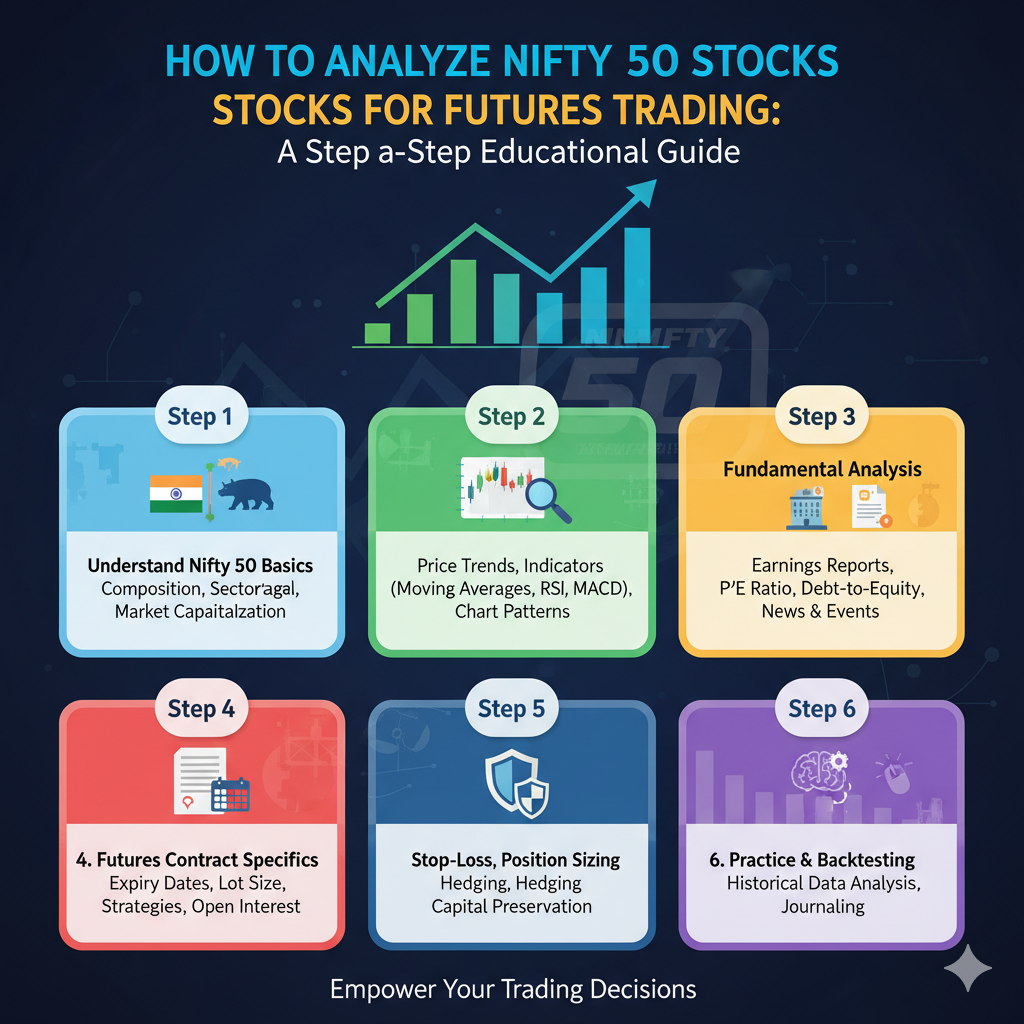
  • How to Analyze Nifty 50 Stocks for Futures Trading: A Step-by-Step Educational Guide

    How to Analyze Nifty 50 Stocks for Futures Trading: A Step-by-Step Educational Guide

    Futures trading in Nifty 50 stocks offers lucrative opportunities for informed investors, but success requires a systematic approach to stock analysis. This comprehensive guide walks you through the essential steps to analyze Nifty 50 stocks for futures trading, helping you make educated investment decisions.

    Understanding Nifty 50 Futures Trading

    The Nifty 50 index represents India’s top 50 companies by market capitalization. Futures trading on these stocks allows investors to speculate on price movements without owning the underlying assets. However, proper analysis is crucial for success.

    Step 1: Fundamental Analysis Framework

    Financial Health Assessment

    • Revenue Growth: Examine quarterly and annual revenue trends
    • Profit Margins: Analyze gross, operating, and net profit margins
    • Debt-to-Equity Ratio: Assess financial leverage and risk
    • Return on Equity (ROE): Measure management efficiency
    • Price-to-Earnings (P/E) Ratio: Evaluate valuation metrics

    Industry Position Analysis

    • Market share within the sector
    • Competitive advantages and moats
    • Regulatory environment impact
    • Growth prospects and market trends

    Step 2: Technical Analysis Techniques

    Chart Pattern Recognition

    • Support and Resistance Levels: Identify key price levels
    • Trend Lines: Determine market direction
    • Moving Averages: Use 20, 50, and 200-day moving averages
    • Volume Analysis: Confirm price movements with volume

    Key Technical Indicators

    • Relative Strength Index (RSI): Measure momentum
    • MACD: Identify trend changes
    • Bollinger Bands: Assess volatility
    • Fibonacci Retracements: Find potential reversal levels

    Step 3: Risk Assessment and Position Sizing

    Risk Management Principles

    • Never risk more than 2-3% of your capital on a single trade
    • Set stop-loss levels before entering positions
    • Calculate risk-reward ratios (aim for minimum 1:2)
    • Diversify across different sectors within Nifty 50

    Position Sizing Formula

    Position Size = (Account Risk / Trade Risk) × Account Balance

    Example: If you have ₹1,00,000 and risk 2% (₹2,000) with a stop-loss creating ₹500 risk per lot, you can trade 4 lots maximum.

    Step 4: Market Sentiment Analysis

    Economic Indicators to Monitor

    • GDP growth rates
    • Inflation data (CPI, WPI)
    • Interest rate decisions by RBI
    • Foreign institutional investor (FII) flows
    • Currency fluctuations (USD/INR)

    News and Events Impact

    • Quarterly earnings announcements
    • Management guidance changes
    • Regulatory updates
    • Geopolitical developments

    Step 5: Timing Your Trades

    Market Hours Strategy

    • 9:15-10:00 AM: High volatility opening hour
    • 2:00-3:30 PM: Afternoon consolidation period
    • Avoid 11:30 AM-2:00 PM: Lunch hour low activity

    Expiry Week Considerations

    • Increased volatility in the last week of monthly expiry
    • Time decay acceleration for option positions
    • Higher margins and risk during expiry week

    Step 6: Building Your Analysis Checklist

    Pre-Trade Checklist

    • [ ] Fundamental analysis completed
    • [ ] Technical setup confirmed
    • [ ] Risk management plan in place
    • [ ] Market sentiment assessed
    • [ ] Entry and exit points defined
    • [ ] Stop-loss and target levels set

    During Trade Management

    • Monitor price action against key levels
    • Adjust stop-loss as trade moves favorably
    • Stay updated with relevant news
    • Avoid emotional decision-making

    Common Mistakes to Avoid

    1. Over-leveraging: Using excessive margin
    2. Ignoring risk management: Trading without stop-losses
    3. Following tips blindly: Not conducting personal analysis
    4. Emotional trading: Letting fear and greed drive decisions
    5. Inadequate research: Insufficient fundamental and technical analysis

    Educational Resources for Continued Learning

    Recommended Tools

    • Trading Platforms: Zerodha Kite, Upstox, Angel Broking
    • Analysis Software: TradingView, ChartInk
    • News Sources: Economic Times, Moneycontrol, Bloomberg Quint
    • Educational Websites: NSE India, BSE India learning modules

    Books for Further Reading

    • “Technical Analysis of the Financial Markets” by John J. Murphy
    • “The Intelligent Investor” by Benjamin Graham
    • “Options as a Strategic Investment” by Lawrence G. McMillan

    Conclusion

    Successful Nifty 50 futures trading requires a disciplined approach combining fundamental analysis, technical analysis, risk management, and market sentiment assessment. Remember that consistent profitability comes from following a systematic process rather than seeking quick profits.

    Start with paper trading to practice your analysis skills before risking real capital. Continuously educate yourself about market dynamics and refine your analytical approach based on market feedback.


    Disclaimer

    This content is for educational purposes only and should not be considered as financial advice. Futures trading involves substantial risk and may not be suitable for all investors. Past performance does not guarantee future results. Always consult with a qualified financial advisor before making investment decisions. The author and publisher are not responsible for any losses incurred from trading activities based on this information.

    Risk Warning

    Futures trading can result in the loss of your entire investment. Only trade with money you can afford to lose. Ensure you understand the risks involved and seek independent financial advice if necessary.

    Keywords: Nifty 50 futures trading, stock analysis, technical analysis, fundamental analysis, risk management, futures trading strategy, Indian stock market, NSE futures, trading education, investment guide

  • Top 5 High-Growth Sectors to Watch in the Indian Stock Market for 2025—Opportunities, Risks & Leading Stocks

    Top 5 High-Growth Sectors to Watch in the Indian Stock Market for 2025—Opportunities, Risks & Leading Stocks

    As we step into 2025, the Indian stock market continues to offer compelling investment opportunities across various sectors. With India’s economy showing resilience and growth potential, smart investors are focusing on sectoral investing to maximize returns while managing risk.

    Sectoral investing has gained significant importance as it allows investors to capitalize on specific economic trends, policy reforms, and technological advancements. In this comprehensive guide, we’ll explore the top 5 high-growth sectors that are positioned to deliver exceptional returns in 2025, along with the opportunities, risks, and leading stocks in each sector.

    1. Technology and Digital Transformation

    Why Technology Sector is Hot in 2025

    The technology sector remains one of the most promising investment destinations in the Indian stock market. With India’s digital economy expected to reach $1 trillion by 2025-26, this sector offers tremendous growth potential.

    Key Opportunities:

    • Digital India 2.0 initiatives driving government digitization
    • 5G rollout creating new business opportunities
    • Cloud adoption accelerating across enterprises
    • Fintech revolution transforming financial services
    • AI and machine learning integration across industries

    Major Risks:

    • Regulatory changes in data privacy laws
    • Global economic slowdown affecting IT exports
    • Intense competition from global tech giants
    • Talent acquisition and retention challenges

    Leading Stocks to Watch:

    • Tata Consultancy Services (TCS) – India’s largest IT services company
    • Infosys – Strong digital transformation capabilities
    • HCL Technologies – Focused on engineering and R&D services
    • Tech Mahindra – Strong presence in telecom and digital solutions
    • Wipro – Growing cloud and cybersecurity portfolio

    2. Renewable Energy and Green Technology

    The Green Revolution in India

    With India committed to achieving net-zero emissions by 2070 and renewable energy targets of 500 GW by 2030, the clean energy sector presents massive investment opportunities.

    Key Opportunities:

    • Solar and wind energy expansion with government support
    • Energy storage solutions becoming critical
    • Electric vehicle charging infrastructure development
    • Green hydrogen emerging as a new fuel source
    • Carbon credit trading creating new revenue streams

    Major Risks:

    • Policy changes affecting subsidies and incentives
    • Supply chain disruptions for raw materials
    • Grid integration challenges
    • Competition from imported cheaper alternatives

    Leading Stocks to Watch:

    • Adani Green Energy – Largest renewable energy company
    • Tata Power – Diversified power generation and renewable focus
    • JSW Energy – Strong renewable energy portfolio
    • NTPC – Government-backed renewable energy expansion
    • Suzlon Energy – Wind energy equipment manufacturer

    3. Financial Services and Banking

    Digital Banking Revolution

    The financial services sector is undergoing a digital transformation, with increasing financial inclusion, digital payments adoption, and innovative financial products driving growth.

    Key Opportunities:

    • Digital payment ecosystem rapid expansion
    • Credit penetration in rural and semi-urban areas
    • Insurance sector growth with increasing awareness
    • Wealth management services for growing middle class
    • NBFC sector recovery and consolidation

    Major Risks:

    • Rising interest rates affecting loan demand
    • Credit quality concerns in certain segments
    • Regulatory tightening on lending practices
    • Economic slowdown impacting loan recoveries

    Leading Stocks to Watch:

    • HDFC Bank – Leading private sector bank
    • ICICI Bank – Strong digital banking platform
    • Bajaj Finance – Leading NBFC with diverse portfolio
    • SBI – Largest public sector bank with rural reach
    • Kotak Mahindra Bank – Premium banking services

    4. Healthcare and Pharmaceuticals

    India’s Healthcare Boom

    The healthcare sector is experiencing unprecedented growth driven by an aging population, increasing health awareness, and government healthcare initiatives.

    Key Opportunities:

    • Generic drugs exports to global markets
    • Biosimilars and biologics development
    • Telemedicine and digital health adoption
    • Medical devices manufacturing under PLI scheme
    • Health insurance penetration increasing

    Major Risks:

    • Regulatory approvals and compliance costs
    • Patent expiry affecting revenue streams
    • Price controls on essential medicines
    • Competition from global pharmaceutical companies

    Leading Stocks to Watch:

    • Sun Pharmaceutical – Largest pharmaceutical company
    • Dr. Reddy’s Laboratories – Strong generic drugs portfolio
    • Cipla – Respiratory and oncology focus
    • Apollo Hospitals – Leading healthcare services provider
    • Divi’s Laboratories – Contract research and manufacturing

    5. Infrastructure and Real Estate

    Building India’s Future

    With massive government spending on infrastructure development and urban growth driving real estate demand, this sector offers significant long-term opportunities.

    Key Opportunities:

    • National Infrastructure Pipeline worth ₹111 lakh crores
    • Smart cities development creating new opportunities
    • Affordable housing with government support
    • Metro rail projects in tier-2 and tier-3 cities
    • Port and airport modernization boosting logistics

    Major Risks:

    • Land acquisition and regulatory delays
    • Raw material price volatility
    • Interest rate sensitivity
    • Environmental clearance challenges

    Leading Stocks to Watch:

    • Larsen & Toubro – Leading infrastructure conglomerate
    • Godrej Properties – Premium real estate developer
    • DLF – Leading real estate company
    • UltraTech Cement – Largest cement manufacturer
    • Bharti Infratel – Telecom infrastructure provider

    Investment Strategy and Risk Management

    Portfolio Allocation Tips:

    • Diversify across sectors to minimize risk
    • Invest in market leaders with strong fundamentals
    • Consider mid-cap opportunities for higher growth potential
    • Monitor policy changes that may impact sectors
    • Use SIP approach for systematic investment

    Risk Mitigation Strategies:

    • Set clear investment goals and timelines
    • Maintain adequate emergency funds
    • Regular portfolio review and rebalancing
    • Stay updated with sector-specific news and trends
    • Consider professional advice for large investments

    Conclusion: Building Wealth Through Sectoral Investing

    The Indian stock market in 2025 presents exciting opportunities across these five high-growth sectors. Technology, renewable energy, financial services, healthcare, and infrastructure are positioned to benefit from India’s economic growth story.

    Key Takeaways for Investors:

    • Research thoroughly before investing in any sector
    • Start with blue-chip stocks in each sector for stability
    • Maintain a long-term perspective for optimal returns
    • Stay informed about policy changes and market trends
    • Consider professional guidance for portfolio construction

    Remember, successful investing requires patience, discipline, and continuous learning. These sectors offer compelling opportunities, but always invest according to your risk tolerance and financial goals.

    Disclaimer: This article is for educational purposes only and should not be considered as investment advice. Please consult with a qualified financial advisor before making investment decisions.

  • 5 Golden Rules for Successful Swing Trading in the Indian Stock Market (2025 Edition)

    5 Golden Rules for Successful Swing Trading in the Indian Stock Market (2025 Edition)

    Swing trading continues to be a popular strategy for Indian investors aiming for short-to-medium-term market gains. Whether you’re trading Nifty stocks or mid-caps, mastering swing trading requires discipline and a clear set of rules. Here are five golden rules to boost your success rate in 2025:

    1. Follow Trends, But Don’t Predict Them
      Use trend-following indicators like moving averages and RSI to identify strong moves. Avoid guessing tops and bottoms—go with the momentum.
    2. Set Clear Entry and Exit Targets
      Decide entry/exit levels before placing any trade. Stick to your plan, even if emotions tempt you to act otherwise.
    3. Risk Only a Small Portion per Trade
      Successful swing traders limit risk—never stake more than 1-2% of capital on a single trade. Use stop-loss orders to protect your capital.
    4. Keep a Trading Journal
      Track every trade, even losses. Reviewing your journal will help you refine strategies and avoid repeat mistakes.
    5. Avoid Overtrading
      Quality beats quantity. Don’t chase every opportunity—pick trades with the best risk/reward setups.

    Conclusion:
    Swing trading can be lucrative if you follow a rules-based approach, sustain discipline, and continuously learn. Apply these golden rules to improve your strategy in 2025.

  • Nifty & Sensex Outlook: Key Trends and Stock Picks for September 2025

    As September 2025 unfolds, the Indian stock market continues to capture investors’ attention with both the Nifty 50 and Sensex reaching exciting new milestones. Whether you’re a seasoned investor or just starting your financial journey, understanding the current market dynamics can help you make informed investment decisions. Let’s dive into what’s driving these indices, key sector trends, and actionable investment strategies for the month ahead.

    Understanding Nifty and Sensex: A Quick Guide for Beginners

    Before we explore the market outlook, let’s clarify what these indices represent:

    Sensex (BSE Sensex) is the benchmark index of the Bombay Stock Exchange (BSE), comprising 30 of India’s largest and most actively traded companies across various sectors. Think of it as a barometer of the Indian stock market’s overall health.

    Nifty 50 represents the weighted average of 50 of the largest and most liquid Indian companies listed on the National Stock Exchange (NSE). It covers approximately 65% of the total market capitalization of all stocks listed on the NSE.

    Both indices serve as key indicators of market sentiment and economic performance, helping investors gauge the overall direction of Indian equities.

    Current Market Scenario: Record Highs and Consolidation

    Sensex Reaches New Heights

    The Sensex has been on a remarkable journey, recently touching fresh record highs as investor confidence remains robust. This bullish momentum reflects:

    • Strong Corporate Earnings: Companies continue to report healthy quarterly results
    • Foreign Institutional Investment (FII) Inflows: International investors are showing renewed interest in Indian markets
    • Economic Stability: India’s resilient economic growth story continues to attract global attention

    Nifty 50 Consolidating Near 25,000

    The Nifty 50 has been consolidating around the psychologically important 25,000 level, indicating:

    • Market Maturity: Healthy consolidation after significant gains
    • Profit-Taking: Some investors are booking profits at these elevated levels
    • Support Building: The index is establishing strong support around current levels

    This consolidation phase is actually healthy for the market, as it allows for sustainable growth rather than unsustainable bubbles.

    Key Sector Rotation Trends in September 2025

    Automobile Sector Momentum

    The auto sector has been showing impressive strength, driven by:

    • Festive Season Demand: September marks the beginning of the festive buying season
    • EV Transition: Electric vehicle adoption continues to accelerate
    • Rural Recovery: Improved monsoons supporting rural purchasing power

    Metals Making a Comeback

    After a period of underperformance, metal stocks are gaining traction due to:

    • Infrastructure Push: Government’s continued focus on infrastructure development
    • Global Demand: Rising international commodity prices
    • Inventory Restocking: Industrial demand picking up

    Financial Services Sector

    Banks and financial institutions remain in focus with:

    • Credit Growth: Robust loan growth across segments
    • NIM Improvement: Net Interest Margins stabilizing
    • Digital Banking: Continued technological transformation

    IT Sector Dynamics

    While facing some headwinds, IT companies are adapting through:

    • AI Integration: Artificial intelligence driving new revenue streams
    • Cost Optimization: Improved operational efficiency
    • Diversification: Expanding into new service areas and geographies

    Impact of GST Reforms on Market Sentiment

    Recent GST reforms have created a positive impact on market sentiment by:

    Simplified Compliance: Reduced paperwork and easier tax filing processes benefit businesses across sectors, particularly MSMEs.

    Improved Cash Flows: Faster GST refunds and streamlined processes improve working capital management for companies.

    Sector-Specific Benefits: Industries like textiles, pharmaceuticals, and manufacturing are seeing reduced tax burdens, translating to better profit margins.

    Increased Formalization: The economy continues to formalize, benefiting organized players in various sectors.

    These reforms are expected to boost corporate profitability and contribute to sustained economic growth.

    Top Stock Picks for September 2025

    1. Adani Ports & SEZ (APSEZ)

    Why We Like It:

    • Strategic Position: India’s largest private port operator with excellent coastal coverage
    • Volume Growth: Consistent cargo handling volume increases
    • Infrastructure Play: Benefits from India’s growing trade volumes
    • Debt Reduction: Improved financial metrics and reduced leverage

    Target Price: ₹950-1,000 (Current levels around ₹850)
    Investment Horizon: 6-12 months

    2. Jayaswal Neco Industries

    Analyst Perspective:

    • Niche Player: Strong position in the copper and brass products segment
    • Capacity Expansion: Recent expansion projects coming online
    • Export Potential: Growing international demand for Indian metal products
    • Valuation Comfort: Trading at reasonable valuations compared to peers

    Target Price: ₹45-50 (Current levels around ₹38)
    Investment Horizon: 3-6 months

    3. Trending Pick: [Current Market Leader]

    Based on recent market movements and analyst recommendations, keep an eye on sectors showing strong momentum, particularly in:

    • Green Energy: Solar and wind energy companies
    • Digital Infrastructure: Data centers and telecom infrastructure
    • Healthcare: Pharmaceutical and diagnostic companies

    Note: Always conduct your own research and consider your risk tolerance before investing.

    Actionable Investment Strategies

    1. How to Track Index Trends

    Daily Monitoring:

    • Use financial websites like Moneycontrol, Economic Times, or Bloomberg Quint
    • Download mobile apps like Groww, Zerodha Kite, or Upstox for real-time tracking
    • Follow key technical levels: Support at Nifty 24,500 and Sensex 81,000

    Weekly Analysis:

    • Review sectoral performance and rotation patterns
    • Track FII/DII (Domestic Institutional Investor) flows
    • Monitor global cues and their impact on Indian markets

    Monthly Review:

    • Assess your portfolio performance against benchmarks
    • Rebalance based on changing market dynamics

    2. Understanding Sector Rotation

    Sector rotation is crucial for maximizing returns:

    Why It Matters:

    • Different sectors perform well at different market cycles
    • Diversification across sectors reduces portfolio risk
    • Timing sector allocation can significantly enhance returns

    How to Benefit:

    • Identify sectors in early growth phases
    • Avoid overcrowded trades where everyone is bullish
    • Use sector-specific ETFs for diversified exposure

    3. Risk Management

    Position Sizing: Never invest more than 5-10% of your portfolio in any single stock
    Stop Losses: Use trailing stop losses to protect profits
    Diversification: Spread investments across sectors and market caps

    Getting Started: Open Your Demat Account Today

    Ready to start your investment journey? Here’s how you can get started:

    Why Choose Upstox?

    Zero Account Opening Charges
    Lowest Brokerage: ₹20 per executed order
    User-Friendly Platform: Easy-to-use mobile app and web platform
    Research Support: Regular market insights and stock recommendations
    Quick Account Opening: Digital KYC process completed in minutes

    Open Your Upstox Demat Account Here – Use My Referral for Special Benefits!

    By using this referral link, you’ll get exclusive benefits and I’ll receive a small commission to keep bringing you quality content – it’s a win-win!

    Steps to Get Started:

    1. Click the referral link and provide basic details
    2. Complete KYC using Aadhaar and PAN
    3. Fund your account with initial investment amount
    4. Start investing in your chosen stocks or ETFs
    5. Monitor and rebalance your portfolio regularly

    Frequently Asked Questions

    What is the Sensex?

    The Sensex (Sensitive Index) is the benchmark stock market index of the Bombay Stock Exchange (BSE). It consists of 30 well-established and financially sound companies listed on BSE, representing various sectors of the Indian economy. The Sensex is calculated using a free-float market capitalization methodology and serves as a barometer of the overall performance of the Indian stock market.

    How do I invest in Nifty stocks?

    You can invest in Nifty stocks through several ways:

    1. Individual Stocks: Buy shares of companies that are part of the Nifty 50 index
    2. Nifty ETFs: Exchange-traded funds that track the Nifty 50 index
    3. Index Funds: Mutual funds that replicate the Nifty 50 portfolio
    4. Nifty Futures: For advanced traders (requires higher capital and risk tolerance)

    For beginners, starting with Nifty ETFs or index funds is recommended as they provide instant diversification.

    What is sector rotation?

    Sector rotation is an investment strategy where investors move their money from one industry sector to another based on economic cycles and market conditions. Different sectors perform better at different times due to:

    • Economic cycles: Some sectors perform better during growth phases, others during recessions
    • Market sentiment: Investor preferences shift based on risk appetite
    • Policy changes: Government policies can favor certain sectors
    • Global trends: International developments affecting specific industries

    Understanding sector rotation helps investors optimize their portfolio allocation and potentially enhance returns while managing risk.

    Conclusion

    September 2025 presents exciting opportunities in the Indian stock market, with both Nifty and Sensex showing strong fundamentals despite some consolidation. The key is to stay informed about sector rotation trends, maintain a diversified portfolio, and adopt a long-term perspective.

    Remember, successful investing requires patience, discipline, and continuous learning. Start with small amounts, gradually increase your exposure as you gain experience, and always invest money you can afford to lose.

    Ready to begin your investment journey? Open your Upstox demat account now and take the first step toward building wealth through the stock market!


    Disclaimer: This article is for educational purposes only and should not be considered as personalized investment advice. Please consult with a qualified financial advisor before making investment decisions. Past performance doesn’t guarantee future results.